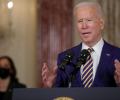
In his maiden address to the employees of the State Department, the US president said he has come to the building to send a clear message to the world: America is back. America is back. Diplomacy is back.

Modi's comments on extreme rhetoric by some regional leaders was an obvious reference to Pakistan Prime Minister Imran Khan, who has been making provocative comments against Modi government and Indian action in the last few days.
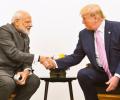
Trump congratulated Modi on his election victory and said that the two countries would work together in many areas including military.

According to official sources, the primary objective of Wei's visit is to deliberate with Indian defence establishment on implementation of decisions taken by Modi and Xi in their informal summit in Wuhan in April.
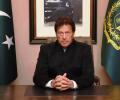
The Pakistani PM explained how the war-like scenario could erupt in the middle of the current tensions between the two nuclear-armed neighbours. He said Kashmiris would protest and India would launch a crackdown on them.

'As events at Kargil and Pakistan's continued support to terror activities in India prove, Pakistan has always felt that the break-up/destruction of India was within its capability,' notes Colonel Anil A Athale (retd).

India and Russia on Thursday decided to expand cooperation in various sectors as they signed 16 pacts, including on joint manufacture of 226 military helicopters.
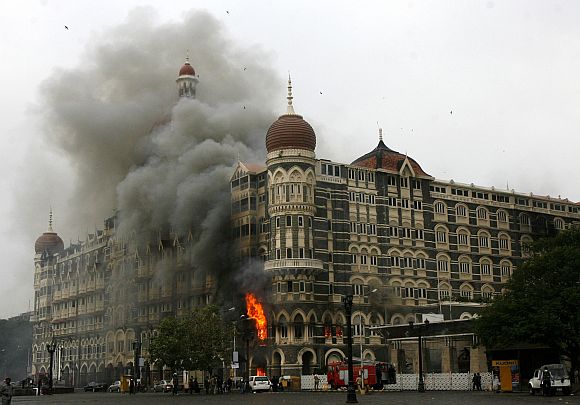
'Headley's testimony indicates to what extent the Pakistan government and its proxies can go to destroy not only Indian scientific talent but also international expertise.'

A proposed nuclear deal aims to stop Pakistan from building small tactical nuclear weapons that could fall into terrorist hands.
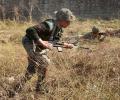
All Indian prime ministers must know that the route to their Nobel Peace Prize doesn't go through Pakistan, says Rajeev Sharma.
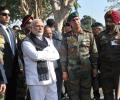
'The attack on the Pathankot base constituted an act of war. Yet Modi's only public comment up until now on that attack has been to blame it on "enemies of humanity".' 'Modi came to power talking tough about Pakistan. But in office, he has pursued a Pakistan policy that has lost both direction and purpose,' argues Brahma Chellaney.
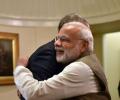
The camaraderie between Modi and Obama has taken the India-US relationship to unprecedented and transformative levels.
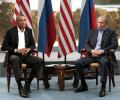
United States President Barack Obama may cancel his scheduled visit to Moscow to meet his Russian counterpart Vladimir Putin, as tension builds up between the two countries over fugitive intelligence leaker Edward Snowden, according to media reports.

United States President Barack Obama will have a tight schedule during his three-day visit starting January 25, as he will hold talks with top leadership in New Delhi on ways to make progress on key issues like defence and civil nuclear agreement and attend the Republic Day celebrations as the chief guest, among other engagements.

Modi, who is leaving for Iran on Sunday, will also pay a two-day visit to Qatar from June 4.
'Unlike Trump, who has an isolationist approach, Bolton would like to roam around the world, trampling upon any sign of dissent,' says Ambassador T P Sreenivasan.

'We should give (Mueller) credit. In general, he conducted an objective probe and confirmed the absence of any traces and collusion between Russia and the current administration'

Organisers warn participants against eating out over COVID-19 risks.

Immediate NSG membership will not help India realise its nuclear ambitions any faster. It could have easily left the process take its own course, instead of running a high-stakes campaign to get in, says B S Raghavan.
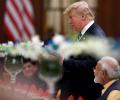
Modi may take satisfaction from his display of considerable political skill in managing a mercurial, temperamental and unpredictable US president and nudging him into uncharacteristic restraint and even carefully orchestrated remarks. This personal chemistry will come in handy if Trump returns as president in the November elections, says former foreign secretary Shyam Saran.
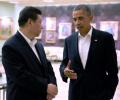
Chinese President Xi Jinping will make his first state visit to the United States in September, China said on Wednesday, hours after President Barack Obama spoke to him and called for "swift work" to narrow down differences on cyber theft, pace of reform and currency issues.

Thimpu apparently didn't think it necessary to take Delhi into confidence. Bhutan is loathe to getting dragged into the geopolitical rivalry between India and China. And for Beijing, this was too good an opportunity to be missed to thumb its nose at the powers-that-be in Delhi, points out Ambassador M K Bhadrakumar.

United States Secretary of State John Kerry on Monday said both India and United States have invested in the relationship and will continue to deepen it by creating a healthier, more secure and prosperous future to be able to impact policies that affect the world.
Indian businesses in the US have created about 91000 jobs in the US.

Modi is courting Japanese investment in an ambitious industrial "corridor" to run between Delhi and Mumbai.

India is keen on the issue of equal share holding since it doesn't want a repeat of the distortions that have crept into Bretton Woods institutions like International Monetary Fund, World Bank and the Asian Development Bank in which rich countries like the US and Japan have a strangle hold.

"Both India and China are victims of terrorism and the region was suffering from the menace. The prime minister said no country is immune from terrorism and on this issue, we cannot afford to have any differences," MEA spokesperson Vikas Swarup told reporters after the meeting.

Prime Minister Narendra Modi on Thursday said even though India's options have increased, Russia will remain the country's "most important" defence partner as Moscow offered to fully manufacture in this country one of its most advanced helicopters.
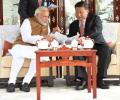
'Till today, we don't know what PM Modi discussed with Xi Jinping and Vladimir Putin, but we have been told that the relations have been reset.' 'We have no evidence from China to show that anything has changed, even though India had made several gestures in preparation for Wuhan,' says Ambassador T P Sreenivasan.
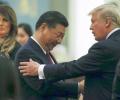
'While many Chinese policy makers dismiss the political, economic and technological component of US-India relations, they express caution on the defence-related ties which also happens to be a major driver in US-India relations,' explains China expert Srikanth Kondapalli.
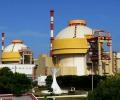
India and Russia are involved in talks to sort out the nuclear liability issues before they sign an agreement for setting up Units III and IV of the Kudankulam power plant in Tamil Nadu during Prime Minister Manmohan Singh's annual summit with President Putin in Moscow next week.
.jpg)
Climate change and US-India collaborations in renewable energy resources will be up for discussion at the US-India energy summit coinciding with Prime Minister Narendra Modi's visit to Washington, DC, later this month, reports Aziz Haniffa.

This will be his first visit to India as President.
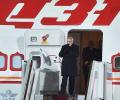
During his two day visit, Modi is expected to seal a raft of major deals in defence, nuclear energy and hydrocarbons sectors to further cement their 'special and privileged strategic ties'.

A list of all the foreign visits taken up by PM Narendra Modi this year and their outcomes.

The PM will pay a two-day visit to Japan from October 28-29 to hold the annual India-Japan summit with Abe. The focus of the visit will be to further expand cooperation in the Indo-Pacific region, carry out joint infrastructure projects in third countries and further boost ties key sectors like defence and trade.

Prime Minister Manmohan Singh and United States President Barack Obama will meet in Washington on Thursday to chart a course for "future cooperation" in areas such as civil nuclear technology, trade, investment, defence and counter-terrorism, amid perceptions that bilateral strategic ties have plateaued.

The tour is aimed at boosting India's economic engagement with these nations and inviting more investment.
'India appears to have stood its ground on strategic autonomy by resisting US pressure on Russia, China and Iran, but succumbed to the temptation to walk into a tighter embrace in defence cooperation, a high priority of the Trump administration,' notes Ambassador T P Sreenivasan.

So, how does Pompeo's check list look like? In a broad sense, he is coming here 'to make sure that we have economic openness'; to ensure that 'we have to deliver'; to understand that 'we have to execute' what we promised to do; and, to 'broach some tough topics', points out Ambassador M K Bhadrakumar.
